Last updated 2026-08-18
TL;DR
Connecticut has no standalone outfitter licensing board. Commercial fishing guides need a Fishing Guide License from CT DEEP under CGS Section 26-28. Hunting guides operate under general wildlife laws with no separate credential. Federal permits apply on USFS, NPS, or Army Corps land. Costs run roughly $40 to $200 by license type. Confirm current fees with CT DEEP before filing.
Does Connecticut have an outfitter licensing board?
No. Connecticut has no dedicated outfitter board, no state outfitter license category, and no formal outfitter registration program like the ones western states run. There is no agency called the Connecticut Outfitter Board. No statute uses the word "outfitter" as a licensed profession.
That surprises people who move from Wyoming or Montana, where an outfitter board issues numbered licenses and carries real enforcement teeth. Connecticut takes a narrower path. The state regulates specific guide activities, mostly freshwater and saltwater fishing guide work, through the Department of Energy and Environmental Protection (DEEP). Hunting guide activity sits in a grayer zone, governed by general wildlife and trespass statutes rather than a guide-specific credential.
If you plan to run a commercial guide service in Connecticut, you build your compliance picture from several agencies at once. CT DEEP handles fishing guide licensing and wildlife permits. The Connecticut Secretary of State handles business entity registration. The relevant federal land manager handles permits if any of your trips cross onto federal ground. None of these is "the outfitter board," and none of them alone covers everything.
Do you need a license for outfitting in Connecticut?
Yes, but the license depends on what you guide. Connecticut treats fishing guide work differently from general outdoor recreation, and the difference changes your whole paperwork picture.
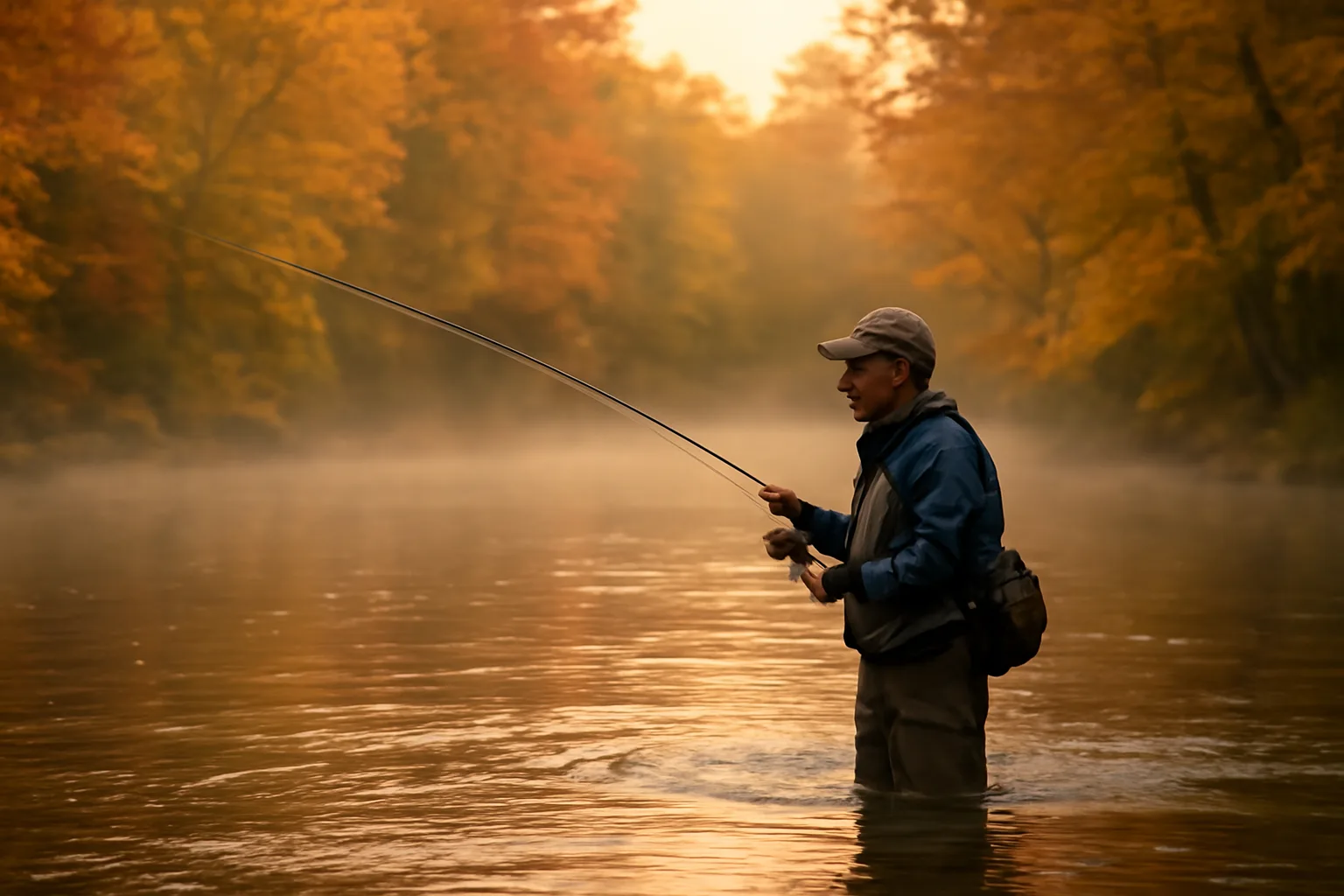
For fishing guides, CT DEEP requires a Fishing Guide License under Connecticut General Statutes Section 26-28. The statute reaches anyone who "takes or assists another person in taking fish for hire or valuable consideration." [1] That language is broad. Charge for a half-day trip on the Farmington River or Connecticut River and you need this license, whether you call yourself a guide, an outfitter, or a fishing experience company.
Hunting guides have no equivalent state credential. Hunters must hold valid hunting licenses, and anyone helping them for pay needs to understand the state's guiding rules, but Connecticut issues no commercial hunting guide license. That does not put you off the hook. Running a paid hunting trip without land agreements, liability coverage, and business registration still creates serious exposure.
General recreation guiding (kayaking, hiking, birding, nature tours) needs no state guide license in Connecticut. You still need any business license your municipality requires, real insurance, and land-access agreements for wherever you take people.
The federal layer sits on top of all of it. If any part of your operation touches land managed by the Army Corps of Engineers, National Park Service, or USDA Forest Service, you need the relevant federal special-use permit or commercial use authorization no matter what the state asks. Guides in Connecticut hit Army Corps water bodies and shorelines more often than true national forest land, but check the managing agency before you assume state compliance is enough.
How much does outfitter licensing cost in Connecticut?
Connecticut costs less than most western outfitter-board states because the structure is simpler. Here is an honest snapshot of what you are likely to spend. Fees change, so confirm current amounts with CT DEEP before paying anything.
| License or Permit | Approximate Fee | Issuing Agency |
|---|---|---|
| CT Fishing Guide License (resident) | ~$40-$55 | CT DEEP [2] |
| CT Fishing Guide License (non-resident) | ~$90-$110 | CT DEEP [2] |
| CT Hunting License (required for guides who hunt) | ~$19 (resident) | CT DEEP [2] |
| Business Registration (LLC or trade name) | ~$120 (LLC filing) | CT Secretary of State [3] |
| Federal Commercial Use Authorization (if applicable) | Varies by agency | Relevant federal agency |
Those ranges come from CT DEEP's published fee schedules and the Secretary of State's filing fees. The DEEP schedule updates periodically, so treat these as ballpark figures. [2][3]
What you skip in Connecticut is the western-state outfitter exam fee, the annual outfitter license renewal fee that runs $200 to $600 in some states, and the mandatory errors and omissions insurance minimums that boards in places like Wyoming require to hold a license. Connecticut has none of that because it has no board structure.
Insurance is a real cost even though the state does not mandate it. General liability for a small guide operation typically runs $500 to $1,500 per year depending on activity type and limits. Get actual quotes from insurers who specialize in outdoor recreation, because that range moves a lot with the details.
How long does the Connecticut outfitter licensing process take?
The fishing guide license moves faster through CT DEEP than anything you would face with a western outfitter board. Most applicants hear back within a few weeks when the application is complete and filed outside peak season. Confirm current processing times with DEEP directly, because staffing and volume shift.
LLC or trade name registration through the Connecticut Secretary of State is usually faster still. Online filings for a new LLC often process within five to ten business days, sometimes quicker. [3]
The federal layer is where the calendar stretches. If you need a special-use permit or commercial use authorization from a federal agency, plan for 60 to 120 days minimum and potentially longer. Federal agencies run their own review timelines, environmental compliance steps, and sometimes public comment periods. Do not book clients for federal-land trips until that authorization is in hand.
Here is the practical version. Start your state applications at least 60 days before your intended start date. If federal land access is part of the plan, open that conversation six months early. The state piece is genuinely faster than most people expect. The federal piece is the one that catches new operators off guard.
What does CT DEEP actually regulate for guide and outfitter activity?
CT DEEP is the main state agency for anyone running outdoor commercial guide services in Connecticut. Its jurisdiction covers freshwater and marine fisheries, wildlife, state forests, state parks, and a range of environmental permits. [4]
For fishing guides, DEEP enforces the guide license requirement under CGS Section 26-28. It can inspect records, require guides to carry the license on-person during trips, and issue citations for violations. [1] The license is not optional for commercial fishing guide activity, and DEEP has pursued enforcement in this space.
For wildlife activity more broadly, DEEP's Wildlife Division oversees permits for falconry, wildlife rehabilitation, and other specialized activities that might intersect with outfitter services. If your operation involves any of those, you deal with a different arm of DEEP than the fisheries division.
DEEP also manages Connecticut's state forests, including Cockaponset, Meshomasic, and Natchaug, where outfitter-style guided trips do happen. Commercial operations on state forest land generally require a permit from DEEP's Forestry Division. That is a separate track from the fishing guide license. If you plan paid trips in state forests, contact the Forestry Division directly. The commercial use permit process for state forests is not well-publicized, and the requirements are set at the agency level, not by statute.
Want to see how neighboring states with more structured board systems work? The outfitter board in Delaware and outfitter board in Florida articles cover different regulatory approaches worth reading.
What business registrations do Connecticut outfitters need beyond DEEP?
A paid outdoor guide service is a business, and Connecticut has standard registration requirements that apply no matter what you guide.
Operate under a name other than your own legal name and you need a trade name certificate (sometimes called a DBA), filed with the town clerk in the municipality where you operate. That is a local filing, not a state one, and the fee is small, usually under $50.
Want liability protection through a formal entity? An LLC is the common choice. A Connecticut LLC costs $120 to file with the Secretary of State, plus $80 per year for the annual report. [3] An S-corp or corporation costs more and adds complexity most small guide operations do not need in the early years.
Connecticut also has sales and use tax rules that can apply to certain guide and outfitter services. Whether your trips are taxable depends on exactly what you sell. A pure guide service may be treated differently from a package that bundles equipment rental or lodging. Connecticut Department of Revenue Services (DRS) guidance on the taxability of recreational services is the right place to research this, and a Connecticut-based accountant before your first season is worth the money. [10]
Entity registration runs through the Connecticut Secretary of State's business portal. [3]
Does Connecticut require insurance for outfitters and guides?
Connecticut law sets no state-mandated minimum insurance requirement specifically for fishing guides or outdoor recreation guides, unlike some outfitter board states. There is no DEEP rule that says you must carry $1 million in general liability to hold a fishing guide license.
That said, no serious guide operates without liability insurance. One accident on the water or in the field can generate liability that wipes out everything you have built. Most commercial guide policies are written on a claims-made basis and cover bodily injury, property damage, and sometimes professional liability.
Land access agreements often impose their own insurance terms regardless of state law. Operate on private land and the landowner's lease or permission agreement may require you to name them as an additional insured and carry specific limits. State forest commercial use permits often include insurance requirements too. Read every land-access document carefully before signing.
The outdoor recreation insurance market has specialized carriers. K&K Insurance, Philadelphia Insurance Companies, and a handful of others regularly write policies for fishing guides and outdoor recreation operators. Get at least three quotes and read the exclusions, especially around watercraft, participant counts, and activity type.
How does Connecticut compare to states with formal outfitter boards?
This context helps if you are choosing where to base an operation, or if you have western-state outfitter experience and find Connecticut confusing.
Colorado, Idaho, Wyoming, Montana, and Alaska run formal outfitter boards with their own statutes, exam requirements, license categories, and enforcement powers. Colorado's Outfitter Licensing Board requires applicants to pass a written exam, carry minimum insurance, demonstrate experience hours, and pay annual fees. [5] Idaho's Outfitters and Guides Licensing Board is one of the most structured in the country, with separate license categories for hunting, fishing, and float outfitters. [6] Alaska licenses guides through state agencies with heavy documentation. [7]
Connecticut is lighter across the board. You deal with a fishing guide license that carries modest fees, no mandatory exam beyond being a licensed angler yourself, and no state outfitter board review. The tradeoff is less bureaucracy and less built-in credibility. In western states, the board license signals to clients and land managers that you passed a meaningful review. In Connecticut, the burden is on you to show professionalism through insurance documentation, references, and reputation.
Curious how structured board systems work in nearby states? The outfitter board in Georgia and outfitter board in Illinois articles cover varying levels of structure.
If your model might expand across the northeast or into board states, the full landscape matters. The outfitter board in Alaska and outfitter board in Colorado articles work as benchmarks for what a fully built-out board system looks like.
What federal permits might a Connecticut outfitter need?
Connecticut has limited USDA National Forest land, so the federal permit layer looks different here than in the west. That does not put you in the clear federally.
The Army Corps of Engineers manages significant water resources in Connecticut, including several reservoirs and river corridors. Commercial guide activity on Corps project waters may require authorization. The Corps' New England District covers Connecticut and handles commercial use inquiries. [8]
The National Park Service administers the Appalachian National Scenic Trail through Connecticut. Commercial guiding on the AT requires an NPS special-use permit. The Appalachian Trail Conservancy and NPS manage commercial use together, and unauthorized commercial activity on the AT violates federal regulations. [9]
Trips involving federal wildlife refuge lands trigger the U.S. Fish and Wildlife Service's own commercial use authorization process.
Build one habit and keep it. Before you take paying clients anywhere, identify the managing agency for that specific land or water, contact them, and ask directly whether commercial activity requires authorization. State compliance does not transfer to federal land. It never does.
OutfitterPath publishes a State Board and USFS Permit Kit (one-time $199) that covers the document framework for federal special-use permit applications alongside state licensing. It can save real time for operators sorting through multiple agencies. Start at /start.
What are the most common mistakes new Connecticut outfitters make?
The biggest one is assuming that no "outfitter board" means no regulatory structure. There is a structure. It is just spread across multiple agencies instead of centralized in one board.
Second most common: skipping business registration because the operation feels informal at first. An unregistered commercial business creates real legal exposure and makes it harder to open a business bank account, qualify for commercial insurance, or sign land-access contracts.
Third: not separating personal and business finances from day one. This is not a regulatory requirement, but it matters enormously at tax time and when you need to show business income to lenders or partners.
Fourth: underestimating federal permit timelines. Guides who plan spring trips on NPS or Army Corps land and apply in March routinely get caught without authorization, because the federal review clock does not bend for your booking calendar.
Fifth: using internet waiver templates without a Connecticut attorney reviewing them. Connecticut has specific requirements for valid liability waivers, and an unenforceable waiver is worse than none because it breeds false confidence. Hire a Connecticut attorney to draft or review your client waiver before your first trip.
Where to get official information on Connecticut outfitter and guide licensing
CT DEEP's Fishing Guide License information is the starting point for anyone guiding fishing trips commercially. Its website publishes the current application, fee schedule, and statutory references. [2]
The Connecticut Secretary of State's business portal handles entity registration and annual reports. [3]
For state forest commercial use permits, contact DEEP's Forestry Division directly. This process is not fully documented online, and staff answer questions by phone.
For federal land authorizations, contact the managing agency: Army Corps New England District for reservoir and river corridor questions [8], and the Appalachian Trail Conservancy or NPS for AT-related trips. [9]
For tax questions on guide service income and sales tax, Connecticut Department of Revenue Services publishes guidance and runs a taxpayer assistance line. [10]
For peer context against more structured systems, the outfitter board in Idaho, outfitter board in Arizona, and outfitter board in California articles cover states where formal boards give a useful contrast.
OutfitterPath's resource library covers state-by-state licensing structures for anyone building a guide operation that crosses state lines or that might relocate to a board state. The federal permit documentation kit is at /start.
Frequently asked questions
Do you need a license for outfitter in Connecticut?
Connecticut issues no general outfitter license, but commercial fishing guides need a Fishing Guide License from CT DEEP under CGS Section 26-28. Hunting guides have no specific state credential but must comply with general wildlife laws. Anyone guiding on federal land (NPS, Army Corps) needs the relevant federal authorization. Business registration through the Secretary of State also applies if you operate commercially.
How much does outfitter licensing cost in Connecticut?
A CT Fishing Guide License costs roughly $40 to $55 for residents and $90 to $110 for non-residents, based on DEEP's fee schedule, though fees change so confirm current amounts before applying. An LLC filing with the Secretary of State costs $120 plus $80 per year for the annual report. Connecticut has no western-style outfitter board exam fee and no annual outfitter license renewal fee.
How long does the outfitter licensing process take in Connecticut?
The CT Fishing Guide License application typically processes within a few weeks when complete. LLC registration with the Secretary of State often takes five to ten business days for online filings. Federal authorizations from agencies like NPS or the Army Corps can take 60 to 120 days or more. Start state applications at least 60 days before launch and federal applications six months out.
Does Connecticut have an outfitter board?
No. Connecticut has no outfitter board, no outfitter license category, and no outfitter registration program. Regulation is distributed: CT DEEP handles fishing guide licensing and wildlife permits, the Secretary of State handles business entity registration, and federal agencies handle permits on federal land. This contrasts with Idaho, Colorado, and Wyoming, which run standalone outfitter licensing boards.
What is the CT DEEP fishing guide license and who needs it?
The Connecticut Fishing Guide License, issued by CT DEEP under Connecticut General Statutes Section 26-28, is required for anyone who takes or assists another person in taking fish for hire or valuable consideration. That includes freshwater and saltwater fishing guides who charge clients for guided trips. The license is separate from a personal fishing license and must be held in addition to it.
Do hunting guides in Connecticut need a special license?
No. Connecticut issues no commercial hunting guide license. Hunters must hold standard hunting licenses, and guides who actively participate must also be licensed hunters. Running a commercial hunting operation still requires business registration, land-access agreements, and appropriate insurance. The absence of a guide-specific credential does not mean there are no legal obligations.
Do Connecticut outfitters need federal permits?
It depends on where you operate. Guiding on Army Corps of Engineers-managed reservoirs or river corridors may require authorization from the Corps' New England District. Commercial guiding on the Appalachian National Scenic Trail requires an NPS special-use permit. Connecticut has no USDA National Forest land, so USFS permits are less common here than in western states, but always verify the managing agency for any land you use.
Is insurance required for outfitters in Connecticut?
State law sets no specific insurance minimums for fishing guides or outdoor recreation operators in Connecticut, unlike outfitter board states that set coverage floors. Land-access agreements, state forest commercial use permits, and federal authorizations often impose their own insurance requirements. Practically speaking, operating without general liability insurance is a serious risk no responsible guide takes.
How do I register an outfitter business in Connecticut?
File a trade name (DBA) certificate with your town clerk if you operate under a name other than your legal name. To form an LLC, file Articles of Organization with the Connecticut Secretary of State online for $120, then file an $80 annual report each year. You may also need to register with Connecticut Department of Revenue Services for sales and use tax depending on what your services include.
Can I guide on Connecticut state forests commercially?
Possibly, but you need a commercial use permit from CT DEEP's Forestry Division before running paid trips on state forest land. This permit is separate from the fishing guide license and is not well-documented on DEEP's public website. Contact the Forestry Division directly for the current application process and requirements. Do not assume a fishing guide license covers commercial use of state forest land.
What happens if I guide commercially in Connecticut without the right licenses?
Guiding fishing trips for pay without a CT Fishing Guide License violates Connecticut General Statutes Section 26-28 and can bring DEEP citations, fines, and loss of licensing eligibility. Operating a commercial business without proper registration creates personal liability exposure and potential issues with the Department of Revenue. Federal land violations carry their own penalties from the relevant federal agency.
How does Connecticut's outfitter regulation compare to western states?
Connecticut's system is significantly lighter. Colorado, Idaho, Alaska, and Wyoming run dedicated outfitter boards that require written exams, experience documentation, minimum insurance levels, and annual license renewals with real enforcement power. Connecticut regulates fishing guides through DEEP with a license that carries modest fees and no mandatory exam. The tradeoff is less red tape but also less built-in consumer protection framework.
Where do I find the current CT fishing guide license application and fees?
Start at CT DEEP's inland fisheries or marine fisheries pages depending on your guide activity. DEEP publishes current application forms and fee schedules on its website. Because fees update periodically and the relevant page can move within DEEP's site, call or email DEEP directly to confirm you are looking at the current version before submitting payment.
Do I need a separate permit to guide kayak or nature tours in Connecticut?
Connecticut requires no state guide license for kayaking, hiking, birding, or general nature tours. You still need business registration, land-access agreements for wherever you operate, and appropriate insurance. If your tours use any federal or state-managed land, the managing agency may require a commercial use permit. Always check with the land manager before running paid trips on public land.
Sources
- CT DEEP, Hunting and Fishing License Fees: CT DEEP publishes the current fee schedule for fishing guide licenses and related credentials
- Connecticut Secretary of State, Business Registration and Annual Reports: Connecticut LLC filing costs $120 with the Secretary of State and requires an $80 annual report; trade name filings are handled at the municipal level
- CT DEEP, About the Department of Energy and Environmental Protection: CT DEEP has jurisdiction over freshwater and marine fisheries, wildlife, state forests, and state parks in Connecticut
- Colorado Outfitter Licensing Board, Licensing Requirements: Colorado's Outfitter Licensing Board requires applicants to pass a written exam, carry minimum insurance, and pay annual fees
- Idaho Outfitters and Guides Licensing Board, License Categories: Idaho's Outfitters and Guides Licensing Board issues separate license categories for hunting, fishing, and float outfitters
- Alaska Department of Natural Resources, Guide Licensing Program: Alaska requires guide licensing through state commerce and natural resources agencies with extensive documentation requirements
- US Army Corps of Engineers, New England District: The Army Corps of Engineers New England District manages water resources in Connecticut including reservoirs and river corridors where commercial guide activity may require authorization
- Connecticut Department of Revenue Services, Sales and Use Tax Guide: Connecticut DRS guidance addresses sales and use tax applicability for recreational and guide services