Last updated 2026-08-18
TL;DR
Paid big game outfitting in Alaska needs a registered guide-outfitter license. You usually spend three years as an assistant guide first, then pass board exams. License fees sit in 12 AAC 02.140 and you should confirm them. The real first-year bill is land permits, camp, boats or aircraft, and insurance, not the board stamp.
Do you need a license for outfitter in Alaska?
Yes. If you take pay to outfit or guide a big game hunt in Alaska, you need a license from the Big Game Commercial Services Board. Working without it is not a missed form. It is unlawful under AS 08.54.720.[3]
A state business license is a different stamp. AS 43.70.020 says you may not engage in business without that license. It does not authorize guiding.[7]
People say outfitter alaska and mean the occupational license. The legislature put the definitions in AS 08.54.790. Read that section before you name the company or write a website. Outfitting, big game hunting services, and transportation services are not interchangeable words in statute.[4]
Land permission is separate. The board license does not open national forest, BLM ground, a park unit, or state land by itself.
If you plan to take paying nonresidents for brown bear, Dall sheep, or mountain goat, the hunting statute already pushes those hunters toward a licensed guide. AS 16.05.407 makes it unlawful for a nonresident or nonresident alien to hunt, pursue, or take brown bear, mountain goat, or sheep unless accompanied in the field by a registered guide-outfitter, a class-A assistant guide, or an assistant guide employed by a registered guide-outfitter, subject to a narrow resident-relative exception.[2]
If you only haul people and gear and you do not guide, that is transporter paper. Do not advertise guiding on a transporter license.
Fishing-only days usually sit with ADF&G, not this board. Boats that carry passengers for hire can add a Coast Guard credential. Confirm that stack before you print a brochure.
How much does outfitter cost in Alaska?
There is no honest single sticker price. Board application and license fees are set in 12 AAC 02.140. Read that section for the current dollar amounts before you budget. Those numbers change by regulation, and a blog that reprints last year's figure is already stale.[6]
The board line is the small line. The money that actually moves is land access, camp, boats or aircraft, fuel, groceries, and liability insurance. I have not seen a clean public dataset on average first-year cash for an Alaska outfitter. Trade chatter is not a study.
Build your spreadsheet in buckets, not one magic total.
| Cost bucket | Who sets it | What you should do |
|---|---|---|
| Board application and license fees | 12 AAC 02.140 | Confirm current dollars on that regulation |
| Alaska business license | AS 43.70 | Confirm the posted fee with the division |
| USFS, BLM, NPS, or DNR land use | Federal and state land rules | Budget the land fee and the wait |
| Aircraft, boats, camp, fuel | The market | This is where year-one cash actually goes |
| Liability insurance | Your carrier and the land manager | Quote it after you know permit terms |
If someone quotes you a turnkey outfitter cost in Alaska that ignores aircraft or a Native corporation access contract, they are selling a fantasy. Confirm every current fee with the board and with the land manager who controls the ground you want to use.
How long does outfitter take in Alaska?
The registered license is not a two-week errand. Most people spend at least three years licensed as an assistant guide or class-A assistant guide, and they actually perform those services, before they qualify to sit for registered status. AS 08.54.610 is the statute that sets that clock, with a board-judged equivalent-experience off-ramp that you should not count on.[1]
Exam dates move. File review moves. Nobody can promise you a decision date, and I will not invent one. Confirm the current exam calendar and any posted processing notes with the Big Game Commercial Services Board.
Land permits can add another season. Forest Service priority-use outfitter-guide authorizations are often competitive. A first temporary or incidental authorization, if you can get one, is still not a lodge key.
If you are starting from zero field time in Alaska, think in years. If you already have clean assistant-guide seasons and hunt records, the remaining wait is the exam, the file, and whatever land office is sitting on your proposal. Those are different clocks. Do not mash them into one number on a lender slide.
What licenses does an Alaska outfitter actually hold?
A working big game operation usually holds more than one piece of paper. The occupational license is the one the board issues. The business license is the one the state issues to almost every business. The land authorization is the one that lets you camp, drop hunters, or run horses on someone else's ground.
The board issues several classes. A registered guide-outfitter license is the one that lets you outfit the hunt and take the client relationship. AS 08.54.610 is that license.[1] A class-A assistant guide license is AS 08.54.620.[14] An assistant guide license is AS 08.54.630.[15] A transporter license is AS 08.54.650 and it is for transportation services, not guiding.[5]
You register for the work you will actually do. Stretching a transporter license into a guided sheep hunt is how people get crossed with both the board and ADF&G.
Borough or city business licenses can pile on if you keep an office in a home-rule place. Confirm that locally. I would not budget a storefront in Anchorage just to look legitimate. Clients book the hunt, not your reception desk.
What does the registered guide-outfitter path require?
AS 08.54.610 is the gate. The statute says a natural person is entitled to the license if that person, among other things, "is 21 years of age or older" and "has been licensed as and performed the services of a class-A assistant guide or assistant guide for at least three years or has equivalent experience as determined by the board."[1]
Alaska law sets the minimum age for a registered guide-outfitter license at 21 under AS 08.54.610.[1]
You also pass the board's qualification examinations. You show the board you can do the field work. You stay off the wrong side of a hunting, guiding, or transportation conviction screen that the same statute spells out. Read the full section. Do not apply off a summary card.
The practical path is slower than the statute's minimum sentence. You get hired. You keep hunt records clean. You learn meat care, trophy care, river crossings, and how a specific guide use area actually hunts. Then you sit the exam.
Equivalent experience sounds like a shortcut. It is a board determination, not a purchase. I would not pay a consultant who talks as if they can waive three field seasons. That money is better spent on a first aid card you still need to keep current and on getting your name on honest hunt records.
Nonresident applicants should ask the board directly which Alaska field time they will count. Do not guess from a forum thread.
How much do land use permits add on top of the license?
They add the part that can stall a season. A board license is statewide occupational paper. It is not a camping permit.
On National Forest System land, commercial outfitting is a special use. 36 CFR 251.50 says, in part, "Before engaging in a special use, persons or entities must submit a proposal to the authorized officer and must obtain a special use authorization from the authorized officer, unless that requirement is waived by paragraph (c) of this section."[8]
Fees for those authorizations sit in 36 CFR 251.57. The authorized officer sets land use fees under that section. Confirm the current schedule and any Alaska Region add-ons with the forest that actually manages your drainage. I will not invent a percent-of-gross figure for your unit.[9]
BLM commercial recreation usually needs a special recreation permit. 43 CFR 2932.11 is the "when do I need one" rule. Read it if your plan touches BLM.[11]
In a National Park Service unit, engaging in business without a permit, contract, or other written agreement is prohibited. That is 36 CFR 5.3, not a park brochure.[10]
State land runs through DNR. AS 38.05.850 is the permit statute. 11 AAC 96.020 is the generally allowed uses list. A lot of commercial camp and drop-off work is not generally allowed. That is when you apply.[13][12]
Native corporation land is private for this purpose. You negotiate access. Those contracts vary so hard that a statewide average would be a lie.
If you want the board forms and a USFS packet in one pile, OutfitterPath publishes a $199 State Board + USFS Permit Kit at /start. Read the statutes yourself either way.
What first year operating costs hit after you are licensed?
The license does not feed clients. Year one cash goes to getting people and gear to a legal camp and bringing meat out.
Aircraft time will humble a spreadsheet. A lot of Alaska outfits live and die by a Super Cub, a 185, or a rented turbine day. I would not buy an airplane to chase a license you do not yet hold. Rent or contract first, then revisit a purchase when you have use areas and a book of hunts that can service the engine reserve.
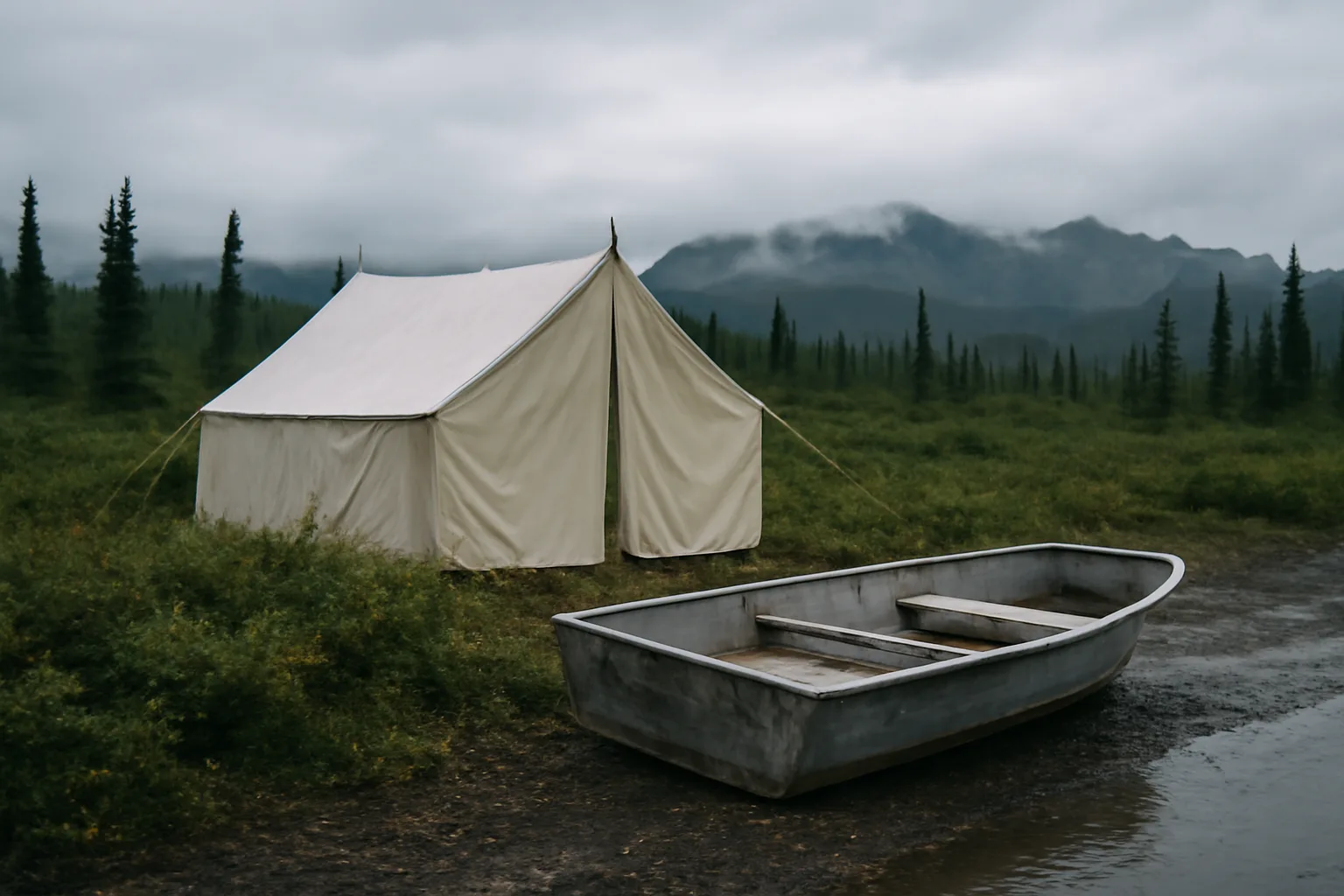
Boats are the same story on the river systems. An aluminum skiff and a reliable outboard are cheaper than a plane and still not cheap once you add props, fuel caches, and a wet year.
Camp is tents, stoves, game bags, satellite comms, and the boring stuff that keeps a health inspector or a land manager from shutting you down. Fancy lodge finishes can wait. Clients remember spoiled meat, not your door hardware.
Fuel, groceries, and labor spike the week the first hunter lands. Assistant guides and packers are not free. If you cannot pay people on time, you will not keep the ones who know the unit.
Insurance binds when the land manager says it binds. Get the permit terms first, then shop the policy. Buying a huge policy before you know the required wording is how you pay twice.
I would skip a retail shopfront, skip custom logo rifles, and skip a second spike camp until the first camp is clean and legal.
Do fishing and boat outfitters follow a different paper path?
Yes, if big game is not the product. Paid sport fishing is generally an ADF&G guide and operator problem under Title 16, not a Big Game Commercial Services Board problem. Confirm the current sport fishing guide and operator applications with ADF&G. Do not assume a registered guide-outfitter license covers a lodge's salmon week.
Mix both products and you hold both stacks. That is common on the peninsula and in Southeast. It is also how people forget a renewal.
Boats that carry passengers for hire can trigger a Coast Guard credential for the operator. Uninspected passenger vessel rules live in Title 46 of the U.S. Code. If your skiff is part of the paid trip, ask a marine inspector or a competent marine surveyor which credential fits your route and passenger count. I am not going to guess your tonnage.
A transporter license still does not make you a fishing guide. A fishing guide license still does not let you outfit a brown bear hunt. Keep the websites honest.
Land permits still apply. A river through national forest is still national forest. 36 CFR 251.50 does not care that your clients brought fly rods.[8]
What insurance do Alaska outfitters actually carry?
Enough to satisfy the land manager and enough to sleep. The board statutes in AS 08.54 spend their energy on qualifications, exams, and hunt conduct. They are not a substitute for the insurance exhibit in a Forest Service authorization or a BLM permit.
Federal authorizations routinely require liability insurance with the United States named as required in the permit. The limit is whatever that permit says. Confirm it. I will not invent a minimum and pretend it is statewide.
Marine operations can add protection and indemnity language. Aircraft operations can add an aviation policy that your general lodge policy will not touch. Stack those only after you know which vehicles actually move clients.
A bond is a different instrument. Some land offices ask for a performance bond for camp restoration or resource damage. That is not automatically the same as professional liability. Ask for the clause in writing.
I would not buy a policy from the first person who calls you an outfitter. Send them the permit insurance exhibit. If they cannot match the wording, keep shopping.
What reports and hunt records do you file once you have clients?
You keep the records the board and ADF&G already told you to keep. Hunt records, transporter activity, and harvest tickets are how the state reconstructs a season when something goes wrong.
AS 08.54 is built around documented hunts, not vibes. If your assistant-guide years are going to count later, the paper from those years has to exist. Missing hunt records are how equivalent-experience stories fall apart.
Land managers want use reports too. Days, stock, clients, and sometimes revenue. 36 CFR 251.57 ties some Forest Service land use fees to the authorization terms, which often include reporting. Late reports make next year's authorization harder, not easier.[9]
I would build a boring folder system the first week you take a deposit. Client name, license numbers, hunt dates, unit, meat and trophy notes, aircraft or boat logs. That folder is cheaper than a complaint file.
Do not invent harvest locations to make a unit look busier. That is how you buy an investigation.
Where do people waste money on the Alaska outfitter path?
They buy the lodge first. Land they do not control is a pretty liability.
They pay for logo work, trade-show booths, and a booking website while they are still unlicensed assistants. Marketing a hunt you cannot legally outfit is a gift to a complainant.
They treat Native corporation access as a handshake. Get the written access terms. A verbal "you can use that strip" disappears when a new land manager shows up.
They under-insure the airplane and over-insure the gift shop. Match the policy to the actual risk.
They hire a fixer who promises the board will accept Lower 48 outfitting years as a full substitute for Alaska assistant-guide time. Read AS 08.54.610 again. Equivalent experience is the board's call.[1]
They also under-spend in one place that matters. Cheap game bags, dead radios, and a first aid card that expired in April. That is how a legal operation becomes a search-and-rescue story.
Compare this path with a state that uses a different board model before you assume Alaska is "just more expensive." The structure is different. Start with outfitter cost in Idaho and Outfitter cost in Colorado: licenses, permits, and startup fees if you are still picking a state.
How does outfitter cost in Alaska compare with other states?
Alaska is slower on the people side and heavier on logistics. The three-year assistant-guide pattern in AS 08.54.610 is a real clock. A lot of Lower 48 registration systems do not make you apprentice that way.[1]
The board fee itself is not why Alaska operations are expensive. Airplanes, weather days, fuel caches, and exclusive access deals are why. A California or Arizona desert day-use model does not translate to a Brooks Range sheep camp. If you want those contrasts in writing, use outfitter cost in California and outfitter cost in Arizona.
Coastal products look more like other saltwater states. A Kenai day boat has more in common with a Florida or Hawaii charter stack than with a guided goat hunt. That is why outfitter cost in Florida and outfitter cost in Hawaii are useful reads if fish, not horns, is the business.
AS 16.05.407 is the demand engine a lot of other states lack. Nonresident sheep, goat, and brown bear hunters are steered to licensed guides. That supports rates. It also concentrates enforcement attention. Price like you will be watched.[2]
OutfitterPath is an independent publisher, not a law firm and not a permitting shop. If you still want the optional form packet, it is at /start. Confirm every current fee and date with the board and the land office before you spend.
Frequently asked questions
Do you need a license for outfitter in Alaska?
Yes, if you take pay to outfit or guide a big game hunt. AS 08.54.720 makes unlicensed big game hunting services unlawful. You also need an Alaska business license under AS 43.70.020, and you need land-manager permission on public land. Fishing-only work is usually an ADF&G license, not this board.
How much does outfitter cost in Alaska?
Board fees are listed in 12 AAC 02.140. Confirm the current application and license amounts there. The larger first-year bill is land permits, camp, boats or aircraft, fuel, and insurance. Nobody publishes a solid statewide average startup total, so treat any single number you see online as incomplete.
How long does outfitter take in Alaska?
Plan on years if you are starting as a new assistant guide. AS 08.54.610 generally wants three years of licensed assistant or class-A assistant work, or equivalent experience the board accepts. Exam dates and file review are not guaranteed. Land permits can add another season. Confirm the current board calendar.
What is the difference between a transporter and a registered guide-outfitter?
A registered guide-outfitter outfits and guides big game hunts under AS 08.54.610. A transporter holds AS 08.54.650 paper for transportation services and does not get to guide the hunt. Advertising a guided sheep or brown bear hunt on transporter-only paper is how people get complaints filed. Keep the license class and the website in the same universe.
Can I outfit on Forest Service land without a special use permit?
Almost certainly no. 36 CFR 251.50 requires a special use authorization before commercial use of National Forest System land unless a listed waiver applies. The Tongass and the Chugach do not become legal drop-off zones because you hold a state guide license. Submit the proposal and wait for the authorized officer.
Do I need a guide license for fishing trips only?
Usually not the Big Game Commercial Services Board license. Paid sport fishing is an ADF&G guide and operator stack under Title 16. Confirm current applications and fees with ADF&G. If a boat carries passengers for hire, ask the Coast Guard which operator credential fits your route. Land permits still apply on public shorelines and rivers.
Can a nonresident become an Alaska registered guide-outfitter?
The statute licenses a natural person who meets AS 08.54.610, including Alaska field experience the board will accept. Do not assume Lower 48 outfitting years automatically substitute. Ask the board in writing which assistant-guide time and hunt records they want. Residency for hunting privileges is a different question from the occupational license.
What game management unit registration do I need?
Registered guide-outfitters work through the board's guide use area and game management unit rules, not a single statewide hunting ticket. You hunt where you are properly registered and where your land permission is real. Confirm current use-area registration steps with the board before you advertise a unit. Selling a unit you cannot legally guide is a complaint waiting to happen.
Does Alaska require an outfitter surety bond?
AS 08.54 focuses on qualifications, exams, and hunt conduct. It is not a published statewide bond menu. Some land managers require a performance bond for camp or resource damage. That is a permit term, not a board slogan. Confirm bonding with the land office that will sign your authorization and with the board if your license class has a current bonding condition.
How much is an Alaska business license for an outfitter?
AS 43.70.020 requires a state business license before you engage in business. The dollar amount is a posted division fee and it can change. Confirm the current biennial price on the Division of Corporations, Business and Professional Licensing business-license fee page. That license still does not authorize guiding.
Can I start only on private or Native corporation land?
Yes, if you have written access and you still hold the right occupational license for the hunt. Private land does not waive AS 08.54. Native corporation land is negotiated ground, and terms vary by region and village corporation. Get the access contract before you take deposits. Public-land permits still apply the moment you cross onto federal or state land.
What happens if I guide without a license?
AS 08.54.720 treats unlicensed outfitting and guiding as unlawful. You can also pick up hunting-statute problems under Title 16 and trespass or special-use problems on public land. Clients can lose animals and tags. I would not test this. Get licensed, or work as an assistant under someone who already is.
Do I need a Coast Guard ticket if I use a boat?
If the boat carries passengers for hire, you may need a Coast Guard operator credential under Title 46. A private skiff you use to move your own camp is not the same fact pattern as a six-pack day. Ask a marine inspector which rule fits your passenger count and waters. State guide paper does not replace that credential.
Are board processing times guaranteed?
No. Exam sittings, incomplete files, and background issues all move a decision. Land managers run their own clocks, and a Forest Service prospectus is not the board's calendar. Anyone who sells you a fixed approval date is not reading the same statutes. Confirm current posted dates with the board and treat them as estimates.
Sources
- Alaska Legislature, AS 08.54.610 Registered guide-outfitter license: Sets minimum age 21, generally three years as assistant or class-A assistant guide or equivalent experience, plus board exams for a registered guide-outfitter license.
- Alaska Legislature, AS 16.05.407 Nonresident and nonresident alien hunts: Nonresidents generally must hunt brown bear, mountain goat, or sheep accompanied by a licensed guide, with a limited resident-relative exception.
- Alaska Legislature, AS 08.54.720 Unlawful acts: Makes it unlawful to provide big game hunting or related services without the required license.
- Alaska Legislature, AS 08.54.790 Definitions: Defines outfitting, big game hunting services, and transportation services for the guide-outfitter statutes.
- Alaska Legislature, AS 08.54.650 Transporter license: Creates the separate transporter license for transportation services rather than guiding.
- Alaska Administrative Code, 12 AAC 02.140 Big Game Commercial Services Board fees: Establishes the current application and license fee schedule for board-issued guide and transporter licenses.
- Alaska Legislature, AS 43.70.020 License required: Requires an Alaska business license before engaging in business in the state.
- eCFR, 36 CFR 251.50 Scope (Forest Service special uses): Requires a special use authorization before commercial use of National Forest System land unless a waiver in that section applies.
- eCFR, 36 CFR 251.57 Rental fees: Authorizes Forest Service land use rental fees for special use authorizations.
- eCFR, 36 CFR 5.3 Business operations: Prohibits engaging in business in NPS areas without a permit, contract, or other written agreement with the United States.
- eCFR, 43 CFR 2932.11 When do I need a special recreation permit: States when a BLM special recreation permit is required for commercial recreational use.
- Alaska Administrative Code, 11 AAC 96.020 Generally allowed uses: Lists uses on state land that are generally allowed without a permit and, by omission, flags commercial uses that need authorization.
- Alaska Legislature, AS 38.05.850 Permits: Authorizes DNR to issue permits for uses of state land, including uses that are not generally allowed.
- Alaska Legislature, AS 08.54.620 Class-A assistant guide license: Creates the class-A assistant guide license class under the Big Game Commercial Services Board.
- Alaska Legislature, AS 08.54.630 Assistant guide license: Creates the assistant guide license class that commonly precedes registered guide-outfitter status.